Animal entry into a Stamford chimney usually happens through an uncapped or damaged flue. Raccoons den in wide masonry flues in North Stamford and Turn of River wooded lots; birds and Chimney Swifts nest in narrower…
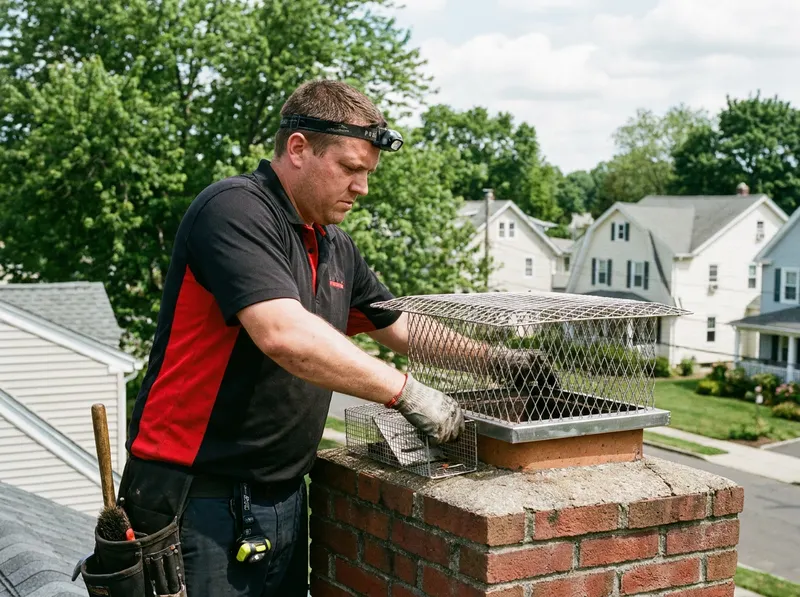
Animal entry into a Stamford chimney usually happens through an uncapped or damaged flue. Raccoons den in wide masonry flues in North Stamford and Turn of River wooded lots; birds and Chimney Swifts nest in narrower flues across Springdale, Glenbrook and Belltown; squirrels drop in from overhanging oaks common in Westover and Newfield. The removal work depends on which animal it is, whether there are young present, and how far down the flue the nest sits. A Level 1 or Level 2 inspection under the standards recognized by the Chimney Safety Institute of America (CSIA) identifies the blockage before any cap goes on, because sealing a live animal or an active nest inside the flue is unsafe.
Chimney Swifts are protected under the federal Migratory Bird Treaty Act, so an active swift nest with eggs or chicks cannot be removed until the birds fledge, usually by late summer. A single bird that fell in and cannot climb out is a straightforward same-visit removal. A raccoon with kits is removed only after the young can travel, which means timing matters. For a one-off bird stuck below the damper, expect a quick extraction and a flue cleanout the same day; for a raccoon den with young, expect a staged plan and a follow-up to clean out the chimney and cap it once the animals are gone.
The permanent fix is a chimney cap with an integrated animal guard and spark arrestor. NFPA 211 references a spark arrestor screen with openings not larger than 1/2 inch and not smaller than 3/8 inch to stop embers while allowing draft. A custom 316 stainless mesh animal spark arrestor resists coastal corrosion better than galvanized steel, which matters for homes near the water in Shippan Point, Waterside and Cove where salt air pits cheaper metal within a few winters. A custom chimney animal guard is sized to the exact flue opening rather than a one-size clamp-on, which is what keeps raccoons out and stops birds from squeezing behind a loose fit. The trade-off is straightforward: a stock cap is cheaper and installs immediately, while a custom 316 stainless guard costs more and may require a measurement visit, but it seals the specific flue and lasts far longer in Fairfield County weather.
A free on-site estimate confirms the flue size, animal type, and cap cost before work begins. It is worth getting some quotes: pricing varies with roof pitch, chimney height, and whether one flue or several need caps. Every removal here includes cleaning out the chimney of nesting material and droppings, because left-behind debris blocks draft and can carry mites or odor into the room.
Every job gets a firm, written price after a free on-site visit.
Tell us about your animal removal & spark arrestor job in Stamford and we'll send a clear, written quote, usually the same day.
 Hearth Guard Chimney Sweep