A chimney cap is the metal hood over the flue; a chimney crown is the concrete or mortar slab it sits on. Both keep water out, and water intrusion is the leading cause of masonry damage the Chimney Safety Institute of…
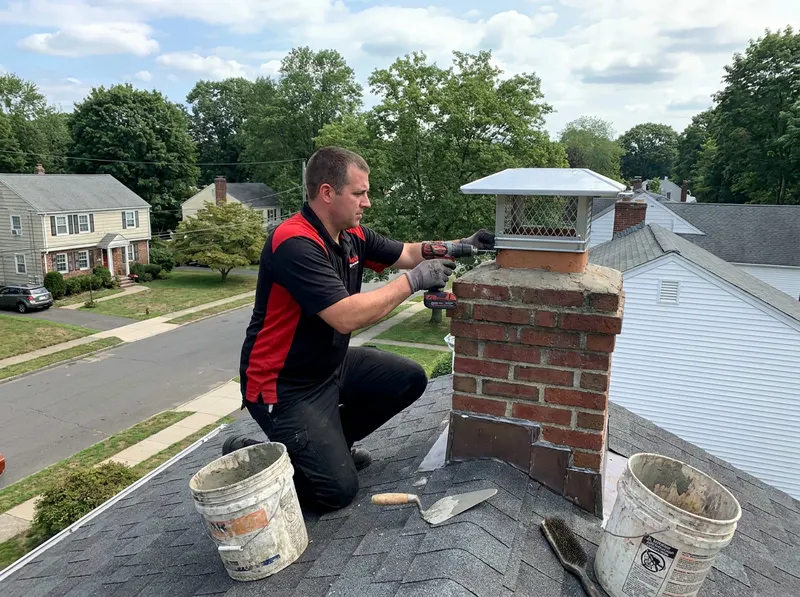
A chimney cap is the metal hood over the flue; a chimney crown is the concrete or mortar slab it sits on. Both keep water out, and water intrusion is the leading cause of masonry damage the Chimney Safety Institute of America (CSIA) documents. High wind off Long Island Sound routinely blows caps loose on exposed roofs in Shippan Point, Waterside, and the Cove, where a homeowner will describe it as "the wind blew my chimney cap back from my chimney." In many of those cases the cap itself is intact and the fix is to reattach the chimney cap by tightening or replacing the mounting bracket and re-seating it on the flue tile.
The repair path depends on what is actually wrong. If the cap lifted off but the metal is straight and the screen is unbroken, a reattachment restores it, no new cap needed. If the cap is dented, rusted through, or the spark screen is torn, chimney cap replacement is the right call, because a torn screen lets embers escape and animals in. A galvanized-steel cap generally lasts around 5 to 10 years before rust; a stainless-steel cap commonly carries a longer warranty and resists the salt air common in Shippan Point and Cove homes near the water. Single-flue caps clamp to a tile that usually measures 8x8, 8x13, or 13x13 inches; multiple flues in one stack, frequent in older North Stamford and Westover chimneys, often need a custom multi-flue cap that spans the whole crown.
Damaged crowns are the related repair. A cracked crown lets rain seep into the chimney below the cap, and cap work often reveals crown damage that was hidden underneath. Chimney crown repair means sealing hairline cracks with a flexible crown coating or rebuilding a spalled crown with fresh mortar. When a homeowner in Springdale, Glenbrook, Belltown, Newfield, or Turn of River says there is "damage to the chimney cap" and asks "is this something you guys can take a look at and potentially fix," the on-site estimate sorts a simple reattachment from a full replacement or a crown rebuild.
Inspection follows recognized standards. NFPA 211 calls for an annual chimney inspection, and cap and crown condition are checked as part of a CSIA Level 1 inspection on a readily accessible system. If a cap failure has let water or debris into the flue, a Level 2 inspection with a camera scan is the appropriate next step to confirm the liner is sound. Photos of the chimney top are provided with every cap and crown job so the homeowner can see the before-and-after without climbing the roof.
Every job gets a firm, written price after a free on-site visit.
Tell us about your chimney cap repair & replacement job in Stamford and we'll send a clear, written quote, usually the same day.
 Hearth Guard Chimney Sweep