Flue repair addresses three distinct problems: a blocked flue, a damaged liner, and a flue that needs to be sealed off. A clogged flue in a Stamford home usually traces to a bird or squirrel nest, fallen clay tile…
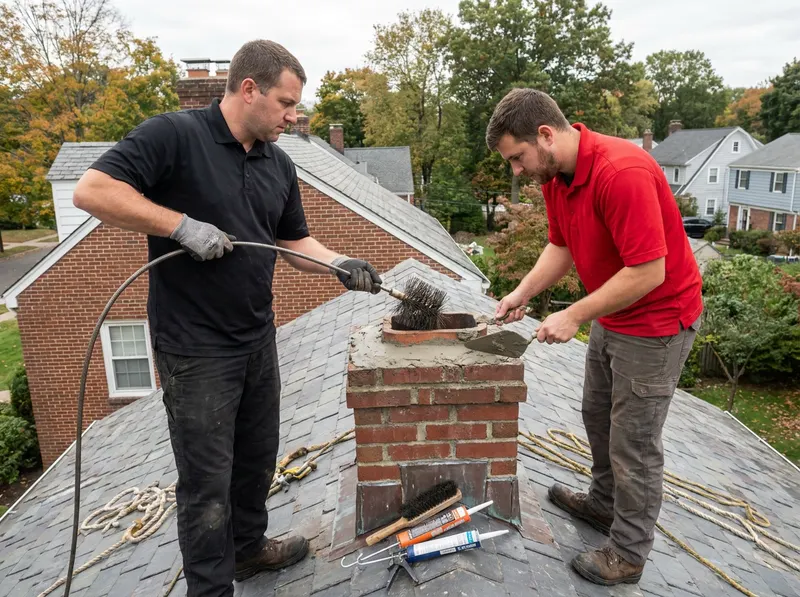
Flue repair addresses three distinct problems: a blocked flue, a damaged liner, and a flue that needs to be sealed off. A clogged flue in a Stamford home usually traces to a bird or squirrel nest, fallen clay tile shards, or packed creosote, common in North Stamford and Turn of River homes where mature trees drop debris down open-top chimneys. Clearing a clogged flue starts with a camera scan so the blockage is identified before any tool goes in; sweeping and mechanical removal handle most cases, while a collapsed tile section calls for relining rather than cleaning. Flue cleaning removes buildup, but cleaning alone will not fix a cracked liner, a gap in the clay tile can let heat and carbon monoxide reach framing, which is why NFPA 211 treats a cracked flue as a repair item, not a maintenance item.
Chimney relining is the fix when the clay tile liner is cracked, spalled, or missing. A stainless-steel chimney flue liner is sized to the appliance and typically carries a manufacturer warranty; it fits an older masonry chimney in Shippan Point or Glenbrook where the original tile has failed after decades of freeze-thaw. If the goal is instead to permanently seal off a flue, an abandoned fireplace flue in a Springdale or Belltown home after a heating conversion, the flue is capped at the top and blocked at the base so no air, moisture, or animals move through it. Sealing an unused flue is straightforward; relining an active flue is the larger job because the liner must run the full chimney height and connect correctly to the appliance.
Deciding between the options follows the inspection. If the camera shows only a nest or loose debris, a clog clearing solves it. If it shows cracked tile joints or a broken liner, relining is required before the fireplace is used again. If the flue serves nothing and will never be used, sealing it off is the cleaner, lower-cost path. A Level 1 inspection covers readily accessible portions of a working flue; a Level 2 inspection adds a video scan of the full interior and is the standard used before relining, after a chimney fire, or during a home sale in Waterside or Cove. The trade-off is time and cost: sealing an unused flue is a half-day job, while a full stainless reline is a full day and a few thousand dollars, so confirming which the flue actually needs prevents paying for the larger fix when the smaller one applies.
Stamford's older housing stock, masonry chimneys in Westover, Newfield, and along the shoreline near Cove Island Park, often shows tile deterioration invisible from the roof, which is why the camera scan comes first. Homeowners asking "is this a chimney company that can actually reline" get a documented answer: photos of the flue interior before and after, so the repair is verifiable rather than described. A free on-site estimate is available to confirm the exact scope and price. Reach the office at (475) 387-3937.
Every job gets a firm, written price after a free on-site visit.
Tell us about your flue repair & sealing job in Stamford and we'll send a clear, written quote, usually the same day.
 Hearth Guard Chimney Sweep